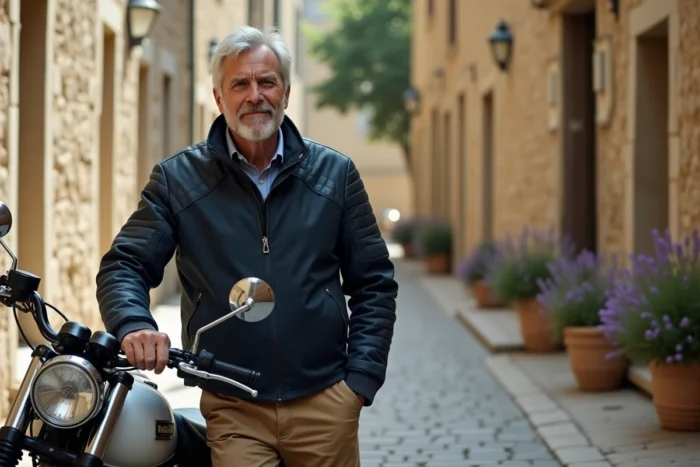
Retirement frees up time, and many experienced motorcyclists are considering taking up or extending their riding practice. Choosing a motorcycle suitable for seniors is not just a matter of engine size or brand. It involves balancing the weight of the machine, the riding position, the electronic aids included, and the overall cost of ownership, including insurance.
Electronic aids: the criterion that seniors underestimate
In recent years, mainstream manufacturers like Honda, BMW, and Yamaha have developed mid-sized motorcycles (around 700 to 900 cm³) that come equipped with advanced assistance features. Cornering ABS, multi-level traction control, riding modes adapted for rain or road: these technologies are no longer reserved for high-end models.
The benefit for senior riders is twofold. These aids reduce physical effort and cognitive stress, two factors that weigh more heavily with age, especially on long trips or in mountainous areas. Cornering ABS, for example, corrects poorly timed braking in a turn without the rider needing to react in a split second.
Some recent touring bikes even offer adaptive cruise control, like the BMW R1300RT. This type of equipment, once reserved for cars, changes the game on long highway journeys where fatigue sets in. Before focusing on style or brand, checking the list of available assistance features can help avoid a purchase that one might regret after a few months.
The approach to choosing a motorcycle for seniors benefits from starting with this technical reading grid rather than just the aesthetic criterion.
Weight and seat height: physical limits dictate the choice
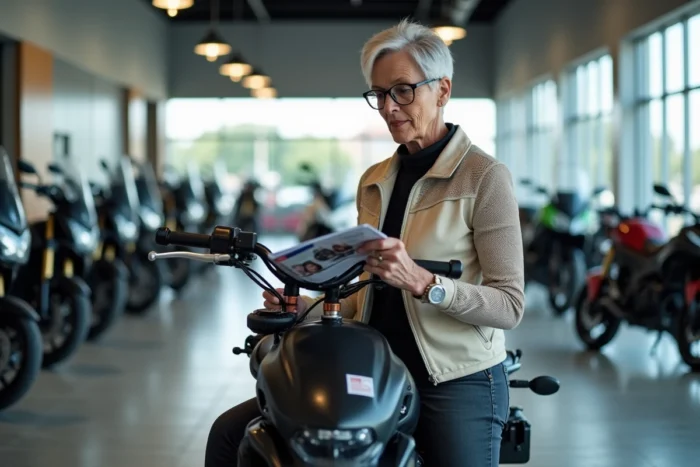
A motorcycle weighing over 250 kg requires significant muscle strength for maneuvers at a standstill, in a parking lot, or on a slope. However, the loss of muscle mass associated with aging makes these situations riskier than at 35. A fall at a standstill with a heavy machine can cause serious injuries to the hips or wrists.
Field reports vary on this point: some 65-year-old riders manage a Gold Wing weighing over 380 kg without difficulty due to its very low center of gravity, while others struggle with a 220 kg trail bike because of its seat height. Weight alone is not enough as a criterion; it is the relationship between weight, seat height, and center of gravity that determines actual maneuverability.
Before any purchase, placing both feet flat on the ground while seated remains the most reliable test. If the motorcycle requires a position on the tips of the toes, it will become a problem at every red light.
Adapting an existing motorcycle rather than changing machines
Several saddle makers and equipment suppliers are now developing accessories specifically designed for the physical constraints of aging motorcyclists:
- Saddles with memory foam and multi-density gel, which limit pressure points at the sacroiliac and ischial areas on long trips
- Raised handlebars and lowered footpegs, which modify the riding position to relieve the lower back and knees
- Orthopedic seat cushions with anti-vibration inserts, sold as a complementary solution for those who do not wish to invest in a custom saddle
These adaptations allow riders to keep a motorcycle they are accustomed to, eliminating the need for relearning on a new model.
Motorcycle insurance costs for seniors: a often overlooked expense
The price of the motorcycle is just the first line of the budget. Insurance can vary significantly depending on engine size, the driver’s profile, and declared usage. Comparison sites increasingly incorporate the senior profile into their criteria, and the age-related surcharge exists with most insurers beyond a certain threshold, even for drivers with no claims.
However, a mid-sized motorcycle generally costs less to insure than a large custom or a high-end touring bike. This factor can tip the balance towards a mid-size model rather than the dream machine one has been thinking about for years.
Coverage to check before signing
- Coverage in case of bodily injury to the driver, often absent from third-party policies
- Breakdown assistance and repatriation, particularly useful for long-distance travel in retirement
- Replacement value or increased value, which prevents losing a significant part of one’s investment in case of theft or destruction
Comparing offers online on dedicated platforms takes an hour and can save several hundred euros per year. The no-claims bonus of an experienced driver remains a negotiation lever that few seniors exploit.
Senior motorcycles and road safety: what age really changes
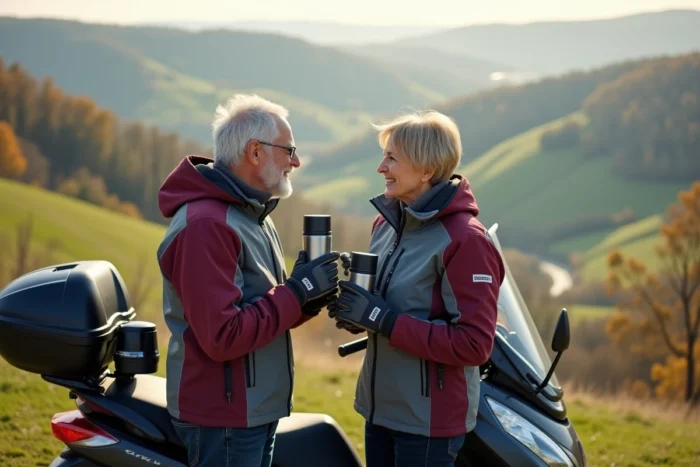
Peripheral vision decreases, reaction times lengthen, and recovery after a long trip takes longer. These physiological realities are not reasons to stop riding, but they do require concrete adjustments.
A refresher course, offered by several driving schools, allows riders to reassess their reflexes in a structured environment. Returning to riding after several years without an update is the main risk factor identified among senior motorcyclists, much more than age itself.
The choice of helmet also deserves special attention. A modular helmet makes it easier to put on for those who wear glasses or have neck pain. An integrated intercom avoids the need to handle a phone, which reduces distractions.
Riding a motorcycle after 60 does not require giving up the pleasure of the road. It demands recognizing that the body has changed and that the machine must adapt to the rider, not the other way around. A prolonged test ride, ideally for half a day rather than ten minutes in a dealership, remains the only reliable method to validate a choice that commits to several years of riding.