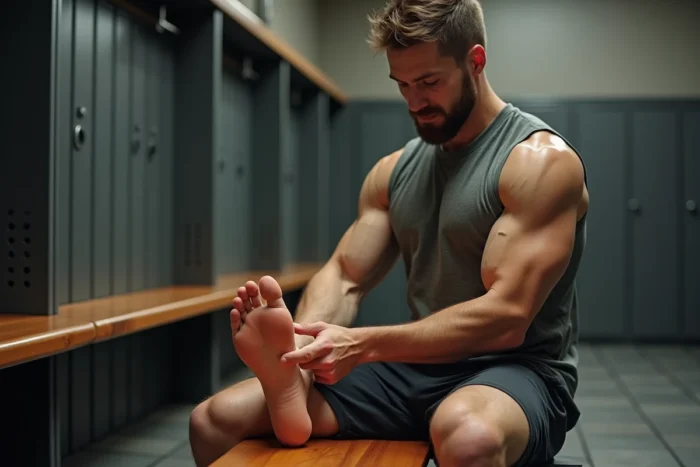
Have you ever noticed that thick, yellowish layer under the forefoot or heel after several weeks of training? This callus on the feet, which podiatrists call hyperkeratosis, affects most regular athletes. It results from a normal skin reaction to repeated friction and pressure. The problem arises when it thickens to the point of causing pain, cracks, or discomfort with every step.
Calluses on the feet of athletes: a natural protection that can become a problem
Before trying to eliminate everything, it’s important to understand a point that many runners overlook: the callus is not entirely the enemy. The skin produces this thick layer to defend itself against microtrauma. A thin callus under the forefoot or heel acts as a shield.
The issue begins when this layer exceeds its usefulness. A callus that is too thick loses its flexibility, cracks, and creates painful fissures. It can also alter the distribution of pressure, leading to chain plantar pain. The goal is therefore not to achieve baby-soft feet, but to maintain a protective layer while reducing excess.
If you are looking for concrete ways to protect the athlete’s foot on J’améliore ma Santé, you will see that this distinction between useful callus and callus to be removed is the basis of any effective strategy.
Mechanical causes of plantar calluses: beyond simple friction
It is often thought that calluses only come from poorly fitting shoes. This is part of the explanation, but not the only one. Three mechanisms combine in athletes.
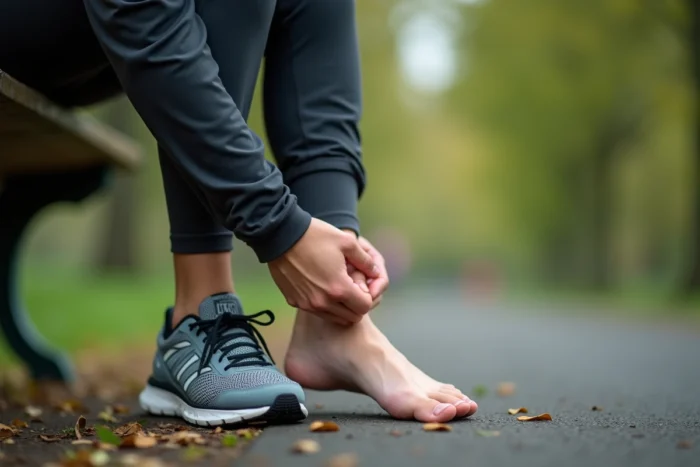
- Repeated friction between the skin and the shoe, especially in areas with prominent seams or overly tight fittings, irritates the epidermis session after session.
- Excessive pressure on a specific area of the foot, related to a support defect (pronation, supination, hallux valgus), concentrates the load on the forefoot or the edge of the heel.
- Skin dryness exacerbates the situation: a poorly hydrated foot loses its elasticity, and the skin reacts by thickening even faster.
This last point explains why winter training, with thick socks and dry air, promotes the formation of calluses. The skin on the heel is naturally low in sebaceous glands, making it more vulnerable.
When the callus reappears in the same spot despite sanding, it’s a clear signal: the cause is mechanical, not cosmetic. A podiatric assessment can then identify the support imbalance and, if necessary, correct it with orthotic insoles tailored to your discipline.
Preventive reduction of calluses before a sports event
Are you preparing for a trail, a marathon, or a long hike? Foot care is part of the preparation just like the training plan. A recent recommendation suggests reducing calluses 7 to 10 days before the event, not the day before.
Why this timing? Because sanding too close to the race leaves the skin thin and sensitive, increasing the risk of blisters and fissures during exertion. By starting a week in advance, the skin has time to slightly reconstitute while remaining flexible.
How to proceed without weakening the foot
Use a classic foot file after a warm bath for a few minutes. The action should remain gentle: remove the excess without trying to smooth everything out. Then apply a moisturizing cream containing urea to the heel and forefoot. This type of product softens the remaining cornified layer without dangerously thinning it.
Avoid pedicure blades or sharp tools sold in supermarkets. Cutting the callus instead of sanding creates micro-lesions that can become infected, especially in a damp sports shoe.
Choosing shoes and socks to limit the recurrence of calluses
Regular sanding is not enough if the shoe reproduces the problem at every outing. Recent biomechanical recommendations emphasize one specific point: a wide fit.
A shoe that is too narrow compresses the forefoot and concentrates pressure on the metatarsal heads. The result: the callus returns to the same spot within weeks. Prefer models without prominent seams at the toes, with enough volume so that the foot does not hit during descents.
Buy your sports shoes at the end of the day when the foot is slightly swollen from fatigue. This detail avoids unpleasant surprises during long outings.
The underestimated role of technical socks
Socks made of synthetic fibers with flat seams reduce friction and wick away moisture. Cotton, on the other hand, retains sweat and softens the skin, which promotes both blisters and reactive thickening of the callus.
Changing socks after each session also limits the development of fungi, which worsen skin dryness and weaken the skin barrier.
When to consult a podiatrist for painful plantar calluses
A home treatment is sufficient in most cases. You can continue to train while regularly sanding and moisturizing. However, certain situations require professional advice:
- The callus is thick, deeply cracked, or bleeding at the heel.
- A callus causes sharp pain upon pressure, like a pebble in the shoe, which may indicate a deep corn (seed corn between the toes or plantar corn).
- The callus consistently returns to the same spot despite changing shoes, indicating a mechanical issue that needs correction.
- You are diabetic or suffer from arteritis: in this case, any foot care must be supervised by a professional to avoid the risk of infection.
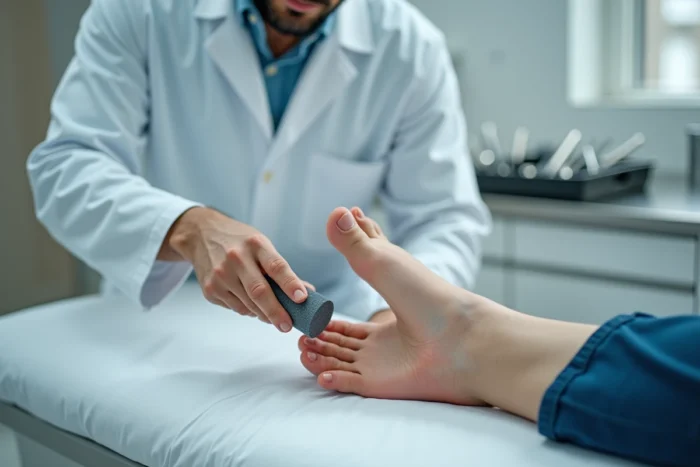
The podiatrist has the right tools to reduce calluses without damaging healthy skin. They can also conduct a pressure assessment and prescribe orthotic devices that redistribute pressure, addressing the cause rather than just the symptom.
Calluses on the feet never justify stopping sports. With regular care, properly fitting shoes, and correcting support when recurrence sets in, the problem remains manageable throughout training. The only reflex to maintain: treat the mechanical cause, not just the surface.