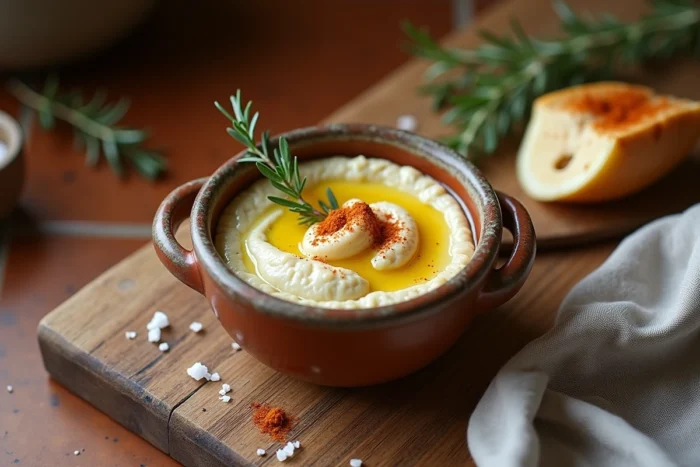
Michel Sarran has built his reputation on Southwestern cuisine that rejects folklore. His interpretation of brandade de morue illustrates this approach: lightening a Mediterranean classic without distorting it, by focusing on texture rather than the amount of fat. The result diverges from the dense and rustic puree found in most recipes published online.
Brandade de morue and Toulouse gastronomy: a dish that transcends its regional framework
Brandade is associated with Nîmes and the Mediterranean coast, rarely with Toulouse. However, the Toulouse chef has integrated it into his repertoire by repositioning it. In his professional appearances, notably at Sirha Lyon and in video capsules filmed for Metro France, Sarran explains that he aims to make the cod more palatable by reducing the amount of olive oil and garlic.
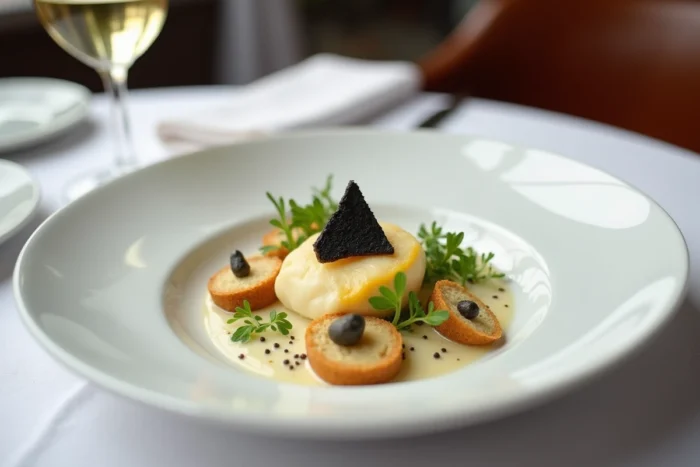
This approach aligns with a trend observed in his various establishments. At Maison Sarran in Toulouse and in the Croq’Michel concept, brandade no longer appears as a single dish served in a casserole. It is presented as fish garnish, cromesquis, or warm spread, often in small, carefully crafted portions. The dish changes status: it shifts from a family classic to an element of gastronomic plating.
Understanding the brandade de morue à la Michel Sarran involves grasping this shift, where tradition serves as raw material rather than a fixed specification.
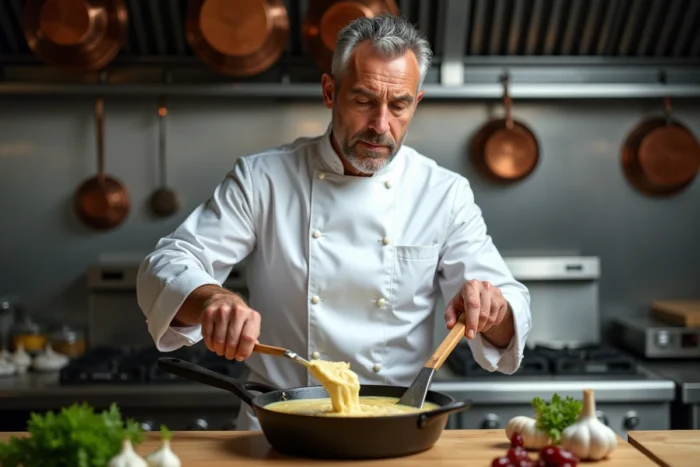
Foamy texture and reduced oil: Sarran’s technical choice
The majority of brandade recipes rely on a generous ratio of olive oil, gradually incorporated into the mashed cod until a thick emulsion is achieved. Sarran takes the opposite approach. He aims for a texture akin to whipped cream rather than a dense puree, which radically alters the mouthfeel of the dish.
How to achieve this lightness without losing the flavor of the cod
The chef emphasizes two technical levers. The first concerns the mechanical aeration of the preparation: the cod is worked longer, with less fat, to incorporate air into the mixture. The second focuses on the quality of desalting, which determines the flesh’s ability to absorb flavors without being masked by residual salt.
Key points to replicate this approach:
- Desalt the cod over a long period, changing the water several times, to achieve flesh that expresses its own flavor without saline aggression
- Reduce the amount of olive oil compared to traditional recipes, compensating with more intensive mechanical work on the flesh
- Whip the brandade at a controlled temperature to promote emulsification without weighing down the texture
- Use garlic sparingly, treating it as an accent rather than a foundational flavor
This method requires more preparation time than a classic brandade. However, it produces a result where each bite reveals the cod before the fat.
Brandade as a garnish or main dish: how the serving format changes things
Serving brandade in small portions rather than as a main dish is not just a matter of presentation. The format alters the taste balance of the meal and how the palate perceives the preparation.
In large quantities, traditional brandade can become overwhelming. The richness of olive oil and the density of the potato create a heaviness after a few bites. By offering it in the form of cromesquis, a quenelle placed on fish, or a spread on a croque, Sarran sidesteps this issue. Brandade becomes a enhancer of texture and flavor rather than a self-sufficient dish.
Potato or not: a divisive choice
The question of potato in brandade remains a culinary debate. The historical Nîmes version did not contain it. The addition of starchy potato has become common over time for economic and practical reasons. In his gastronomic variations, Sarran seems to favor versions where the potato is subtle, or even absent, to maintain the airy preparation.
The available data does not allow for a definitive conclusion on a single, codified recipe from Sarran. The menus of his establishments vary by season, and brandade appears in different forms from one service to another.
Brandade de morue by a Michelin-starred chef: what separates a homemade recipe from a restaurant plate
Reproducing the spirit of a brandade crafted by a chef like Sarran at home is possible, but some discrepancies remain. Professional equipment allows for aeration and texture consistency that are difficult to achieve with a simple whisk or a home mixer.
The choice of cod also plays a crucial role. Restaurants source thick fillets, with few bones, from short supply chains, ensuring firm flesh and uniform desalting. In supermarkets, quality can vary greatly from batch to batch.
- Prefer a fishmonger who sells whole salted cod rather than pre-packaged pieces
- Test the desalting by tasting the raw flesh after soaking: it should be mild without being bland
- Work the brandade with a wooden spatula or flat whisk, adding the oil in a very fine stream
The difference between a successful homemade brandade and a restaurant version lies less in the recipe than in the precision of technique and the quality of the starting product. A hasty desalting or overly fine cod will ruin the result, regardless of the cook’s talent.
The brandade de morue reinterpreted by Michel Sarran reminds us that a dish from the southern culinary heritage can evolve without betraying itself. The lightness of his version, documented in his professional demonstrations, offers a concrete avenue for those who find traditional brandade too rich, without giving up what defines its identity: the cod, the olive oil, and the patient technique that binds them.