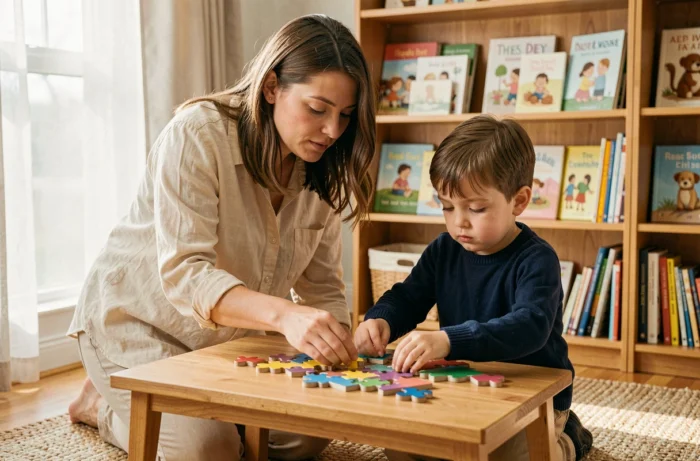
A child spilling their glass of water while trying to pour a drink on their own, another refusing to get dressed in the morning: these everyday scenes aren’t acts of defiance. They signal a desire to do things independently and a need to understand how the world works. Supporting children in their daily lives means learning to read these moments and respond appropriately.
Screens and young children: what the new guidelines mean for everyday life
Since January 2025, the French health record has recommended no screen time at all before age 3. Between ages 3 and 6, screen use should be occasional, educational, and always supervised by an adult. The health record also advises turning off screens before bedtime and not using them to calm a child or help them fall asleep.
An order published on July 2, 2025 goes further: it bans screen exposure for children under 3 in childcare settings. If your child’s nursery follows this rule, it makes sense to follow the same approach at home. Children find it easier to understand boundaries when the rules are consistent across the different environments they spend time in.
In practice, replacing a cartoon with a hands-on activity doesn’t require expensive equipment. A tub of rice to pour from one container to another, stackable cups, or a board book is enough to keep a toddler busy. The benefits show up in the interactions: when the screen is off, children engage more with adults, ask questions, and explore with their hands. Browse Bella Maman’s advice for children for more approaches tailored to each age group.

Physical activity for children: at least an hour of movement a day
The Ministry of Health recommends at least 60 minutes of physical activity every day for children and teenagers. It also advises limiting the time they spend sitting or being inactive. This guideline sounds simple, but it can be hard to follow when the day is filled with school, homework, and car journeys.
Have you noticed that a child who has run around outside after school is calmer in the evening? That’s no coincidence. Movement helps release the tension that builds up during the day. The aim isn’t to take part in an organized sport every day, but to make movement part of the daily routine.
Simple ways to get moving without a sports schedule
- Walk or cycle to school when the distance allows, even for part of the journey (get off one stop early or park five minutes from the entrance).
- Make time for free play outdoors before homework: running, climbing, or jumping rope. Twenty minutes is enough to help restore concentration.
- Get your child involved in physically active household chores: sweeping the floor, carrying a laundry basket, or watering the garden. They get moving, contribute, and feel useful.
The goal isn’t performance. It’s to make movement as natural a part of the day as meals or bedtime.
Everyday independence: observe before stepping in
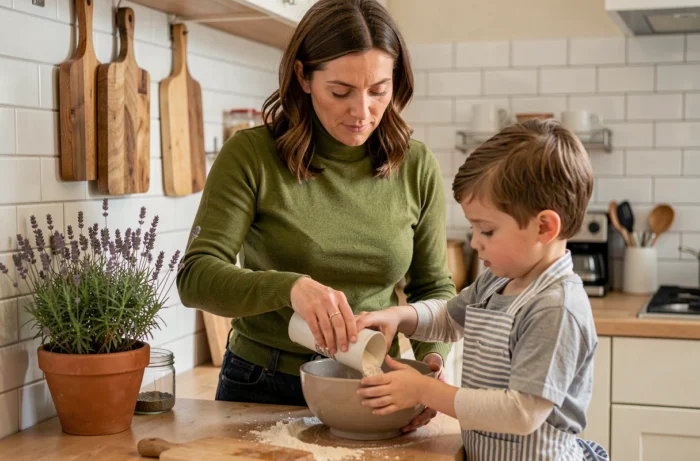
Montessori education is based on a principle parents can apply without any special equipment: children have the potential to learn independently, as long as adults don’t get in their way. Sometimes that means accepting that it takes a child three minutes to put on their shoes when you could do it in ten seconds.
Observing without stepping in straight away is the hardest approach to maintain. The urge to correct, hurry things along, or protect is strong. It comes from a good place, but it can deprive children of the satisfaction of solving a problem on their own.
Adapt the environment instead of repeating instructions
A 3-year-old can’t put their things away if the shelf is too high. They can’t get dressed on their own if their clothes are piled in an inaccessible drawer. Before repeating an instruction, check that the environment really allows your child to do what you’re asking.
A few practical adjustments can make a noticeable difference:
- Put out the next day’s clothes on a hook at your child’s height the night before.
- Keep cutlery and plates in a low cupboard so your child can help set the table.
- Place a sturdy step stool in the bathroom so your child can wash their hands and brush their teeth.
- Set aside a clearly marked place for toys, using labeled bins or baskets (with pictures for children who can’t read yet).
Every successful task builds confidence. Children don’t remember the lesson they’re told; they remember the experience of succeeding on their own.
Support children’s emotions without suppressing them
A tantrum in the supermarket, tears when it’s time to leave the park: these reactions reflect a child’s difficulty managing an emotional surge that their brain isn’t yet equipped to handle alone. Saying “stop crying” or “it’s nothing” dismisses what the child is feeling without giving them the tools to work through the emotion.
The first step is to name what you observe. “You’re angry because we have to leave” isn’t a question; it’s a reflection. The child feels understood, and that understanding is often enough to ease the intensity of the outburst.
Three steps for responding to strong emotions
First, acknowledge the emotion (get down to your child’s level and place a hand on their shoulder). Then name it (describe the emotion without judgment). Finally, offer a practical alternative (“We’re leaving in two minutes. Would you like one last turn on the slide?”). The order matters: acknowledge the emotion before trying to reason with your child.
This approach won’t prevent every outburst. It gradually teaches children that their emotions are valid and that there are ways to work through them without letting the situation escalate.
Supporting a child in everyday life doesn’t require a revolutionary method or a special budget. An environment suited to their size, daily movement, no screens before age 3, and a listening ear when emotions run high provide a solid foundation. Everything else comes with repetition, adjustments, and the patience each day calls for.