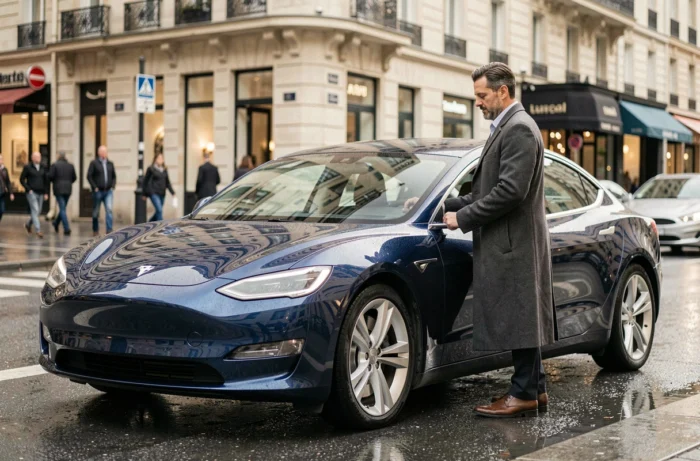
How has the European automotive market actually changed in 2024, beyond the announcements from auto shows and spectacular concept cars? With registrations declining, a redesigned French ecological bonus, and unprecedented European tariffs on certain Chinese electric vehicles, the figures paint a more nuanced picture than the manufacturers’ brochures.
Registrations and powertrains in Europe: the data that matters
The ACEA has published figures that shed light on the choices of European buyers. In September 2024, new car registrations in the European Union fell by 6.1%. This overall decline masks very different trajectories depending on the powertrains.
| Powertrain | Trend in September 2024 | Cumulative market share (January-September) |
|---|---|---|
| Conventional hybrids | On the rise | Up for the year |
| Plug-in hybrids | Declining | Down compared to 2023 |
| Battery electric vehicles (BEV) | Rebound after a weak August | 14% of the market since January |
Conventional hybrids are gaining ground because they represent a perceived accessible compromise: no charging constraints, reduced consumption, and purchase prices lower than electric vehicles. Plug-in hybrids, on the other hand, are suffering from the gradual end of certain subsidies and a high entry cost.
Battery electric vehicles, with their cumulative share at 14% over the first nine months of 2024, show that adoption is progressing, but in irregular steps. A weak month is enough to reignite doubts about the speed of the transition.
To track these developments month by month, news on team-auto-passion.com regularly relays market data and manufacturer announcements.
French ecological bonus: the environmental score changes the game
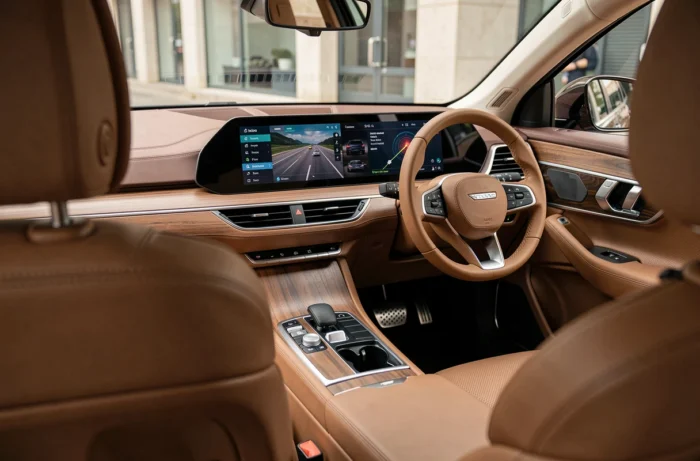
The ecological bonus is no longer just a discount linked to the type of powertrain. Since the entry into force of decree n° 2023-930 of October 7, 2023, and the associated order, eligibility also depends on the carbon footprint of manufacturing and delivery of the vehicle.
This environmental score evaluates the complete cycle: extraction of raw materials, assembly, transport to the point of sale. An electric vehicle produced on the other side of the world with heavily carbonized energy can therefore lose its eligibility for the bonus, even if it shows zero emissions during use.
Concrete consequences for buyers
Several imported models (notably from China) have been excluded from the scheme. This is significant: for an individual, losing the bonus represents several thousand euros on the final price.
- Manufacturers that assemble in Europe retain a direct advantage on the displayed price thanks to the maintenance of the bonus
- Some Chinese groups have accelerated their European factory projects to bypass this carbon filter
- Buyers must now check the environmental score of the targeted model before relying on the aid, which was not necessary before
The mechanism thus has a dual function: to reduce overall emissions from the vehicle fleet and to protect the competitiveness of European production.
European countervailing duties on Chinese electric vehicles
The European Union has crossed a threshold by establishing definitive countervailing duties on certain electric vehicles manufactured in China. This measure aims to neutralize the effect of Chinese public subsidies that allowed certain models to arrive in Europe at very low prices.
The logic is different from that of the ecological bonus. Here, it is not about carbon footprint but about unfair commercial competition. The two schemes accumulate and create a double filter for vehicles imported from China.
The risk of circumvention by plug-in hybrids
A less publicized angle deserves attention. The countervailing duties target purely electric vehicles. Plug-in hybrids manufactured in China are not subject to the same surcharges, which opens a potential loophole.
Chinese manufacturers could prioritize the export of plug-in hybrids to Europe to evade the duties while capturing market share. This discrepancy between tariff policy and the reality of exported ranges is a point to watch in the coming quarters.
Paris Motor Show 2024: what the concepts reveal about industrial priorities
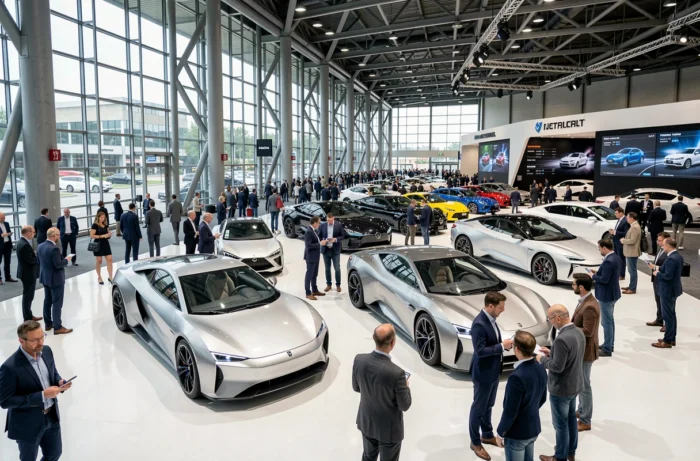
The Paris Motor Show took place from October 14 to 20, 2024, at Porte de Versailles. Beyond the models displayed, the choices of the manufacturers present reflect readable strategic orientations.
Renault showcased the Renault 4 E-Tech Electric, reviving an icon in electric form. Alpine presented the A390β, a concept that positions the brand in the high-end electric sports segment. Citroën multiplied the variations: restyling of the AMI, Buggy Vision version, new C3 Aircross, C5 Aircross Concept.
French manufacturers focused their announcements on electric vehicles intended for the European market, in direct coherence with the regulatory framework described above. Producing locally, responding to the environmental score, avoiding countervailing duties: the industrial strategy and product strategy converge.
- Urban and compact models (AMI, Renault 4) target a price-sensitive audience and everyday use
- Sporty concepts (Alpine A390β) serve to reposition brands on added value and margins
- Restyled compact SUVs (C3 Aircross, C4) respond to the best-selling category in Europe
The share of European world premieres at the Paris Motor Show confirms that the event remains a strategic launch venue, even though several major groups (notably German and Japanese) are now limiting their presence at physical shows.
The European automotive market in 2024 is neither just a race towards electric vehicles nor a retreat to thermal engines. Registrations show a stepwise adoption, hindered by cost and accelerated by regulation. The French environmental score and European countervailing duties redraw the map of accessible models. The stakes for manufacturers are now as much regulatory as they are industrial, and the coming months will reveal whether Chinese plug-in hybrids exploit the open tariff loophole.