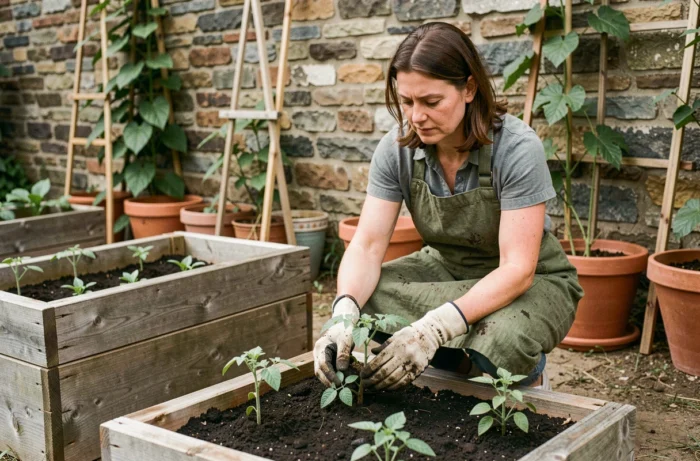
A productive vegetable garden year-round relies on a logic of crop succession: each harvest frees up space that immediately welcomes a new sowing or planting. This ongoing rotation requires understanding how the soil regenerates, how water circulates, and which plants tolerate cold or heat.
Managing a vegetable garden over twelve months is not about gardening more, but about anticipating each transition between two crops to never leave the soil bare.
Crop succession in the vegetable garden: chaining without exhausting the soil
The principle of crop succession involves replacing a harvested crop with another that does not belong to the same botanical family. Leafy vegetables (lettuces, spinach) follow, for example, root vegetables (carrots, beets), because their nutrient needs differ.
This relay prevents localized depletion of the soil in nitrogen, potassium, or phosphorus. The roots of each family explore different depths, which naturally aerates the soil and limits compaction.
To plan these sequences, specialized resources facilitate the work. Several sowing calendars and cultivation sheets are available on the Le Jardin d’Emilie website, with concrete indications on favorable associations between vegetables.
A common pitfall is replanting tomatoes or squash in the same spot two years in a row. Pathogens (downy mildew, fusarium) overwinter in the soil and reinfect the next crop. Leaving three years before returning to the same family in a plot significantly reduces this risk.
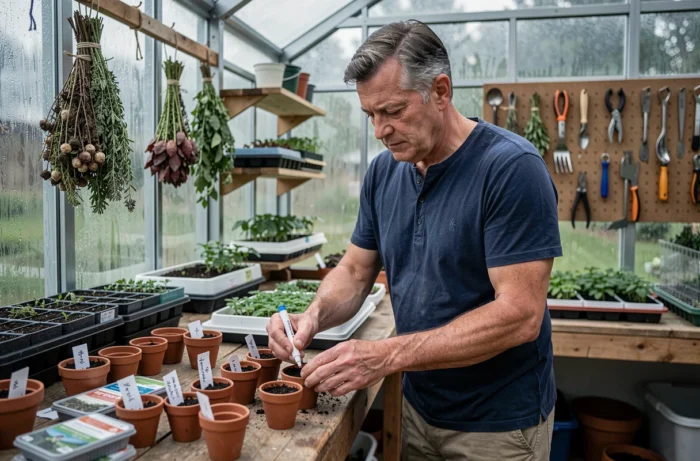
Preparing the soil of the vegetable garden between two crops
Between a harvest and a sowing, the soil needs an organic input and a cover. Two complementary mechanisms come into play.
Green manures to regenerate the soil
Green manures (phacelia, mustard, crimson clover) are sown as soon as a plot is freed up, even in autumn. Their roots loosen the soil, capture atmospheric nitrogen for legumes, and their cut and incorporated biomass nourishes microbial life.
A sowing of mustard in September-October covers the soil in a few weeks. In spring, it is enough to mow and superficially bury the residues before transplanting.
Permanent mulching against erosion
A bare soil impoverishes and compacts under the effect of rain. Mulching (straw, dead leaves, wood chips) maintains moisture, regulates soil temperature, and limits the germination of weeds. In winter, a layer of mulch also protects the roots of crops left in place (leeks, lamb’s lettuce, spinach).
- Cereal straw: decomposes slowly, ideal around strawberries and tomatoes in summer.
- Shredded dead leaves: rich in carbon, suitable for plots left in winter rest.
- Wood chip mulch (BRF): stimulates soil fungi, reserved for long-term crops like squash.
Watering the vegetable garden: regulatory framework and water conservation
Watering represents the heaviest consumption item in a vegetable garden managed year-round. Since the decree of July 12, 2024, rainwater collected from roofs is classified among water unfit for human consumption, but its use for watering the vegetable garden remains permitted.
For an outdoor installation dedicated exclusively to watering, no declaration at the town hall is generally required. However, an indoor connection requires a separate network and a declaration.
Drought restrictions and water source
Prefectural orders during drought periods may limit watering supplied by the public network, a well, or extraction from an aquifer. A rainwater reserve disconnected from the natural environment may be treated differently by authorities. Watering schedules may also be imposed locally, for example, only at night.
Watering at the base, drip irrigation, or using buried oyas reduces consumption and limits water splashing on foliage. Watering at the base is also a health issue when using collected rainwater: avoiding direct contact with the edible parts of vegetables reduces the risk of bacterial contamination.
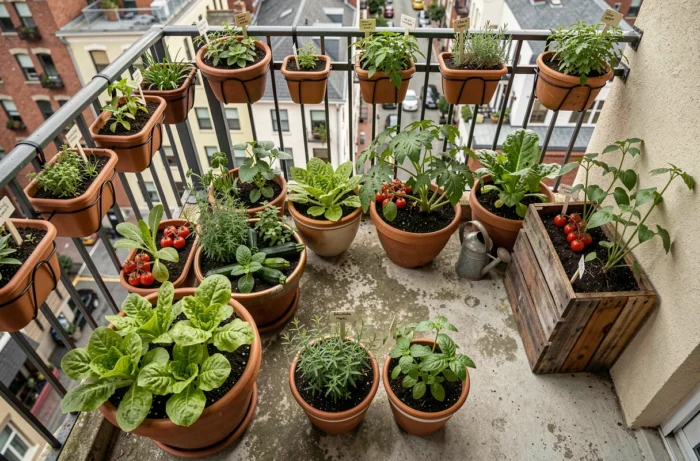
Winter vegetable garden: cold-resistant crops and protections
Maintaining winter production requires selecting suitable varieties and protecting crops at critical times.
Lamb’s lettuce, winter spinach, cabbages (kale, Brussels sprouts), leeks, and beets can withstand light frosts without special protection. For more sensitive vegetables or to advance late winter sowings, a winter cover or forcing bell is sufficient in most situations.
- Winter cover: allows water and light to pass through, protects down to a few degrees below zero depending on the weight.
- Forcing bell: creates a microclimate around an isolated plant, useful for winter salads.
- Cold frame (glass frame placed on the ground): allows starting lettuce or radish sowings as early as late winter without heating.
- Thick mulch: protects the roots of crops in place (Jerusalem artichokes, parsnips) even during prolonged frost.
Sowing green manures on empty plots in autumn completes the system: the soil remains covered, structured, and ready to welcome spring plantings without deep plowing.
Planning vegetable garden sowings month by month
Planning avoids empty periods. A sowing calendar adapted to the local climatic zone (dates vary between the north and south of France) indicates when to sow under cover, when to transplant outdoors, and when to harvest.
The principle is to always have seedlings waiting while one crop occupies the plot. Indoor or cold frame sowings take over when the outside soil is still too cold.
Three simple markers help structure the year: early sowings under cover start in late winter, outdoor plantings span from spring to summer, and late-season sowings (lamb’s lettuce, radishes, spinach) are done between August and October to ensure winter production.
A productive vegetable garden year-round does not require more space than a seasonal vegetable garden. The difference lies in the rigorous succession of crops, the permanent coverage of the soil, and a frugal management of water. Each harvested plot immediately becomes the support for the next crop, with no downtime or exposed soil.