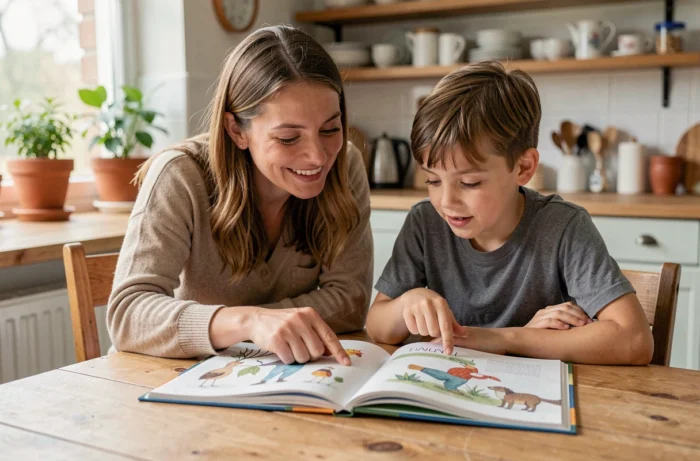
A child in Year 6 comes home from school and says they asked a chatbot to summarise the Hundred Years’ War. The answer was fluent and detailed, and they believe it’s reliable. Let’s check it together: two dates are wrong, and one of the people mentioned never existed.
This scenario is playing out in more and more homes, yet most guides for families still don’t address it. UNICEF France now recommends studying the effects of artificial intelligence on children’s development and strengthening safety requirements for systems they can access. The issue goes beyond social media and traditional fake news.
When a child uses AI as a source of information
Family guidance on digital technology still focuses mainly on social media, screen time and inappropriate content. Children’s use of conversational chatbots remains a blind spot. A child who asks an AI a question won’t see any ads or toxic comments, but they will get answers delivered with the kind of confidence you’d expect from a school textbook.
The problem is that AI doesn’t flag its own mistakes. It doesn’t distinguish between a hypothesis and a verified fact. A knowledgeable adult may spot an inconsistency. An eight- or ten-year-old rarely will.
To explore this at home, try a simple exercise: ask the chatbot the same question twice, a few hours apart, and compare the answers. When a child sees the machine contradict itself, the discussion about reliability becomes tangible. Several resources collected on the Parents Ensemble website can help families structure this kind of conversation around media literacy.
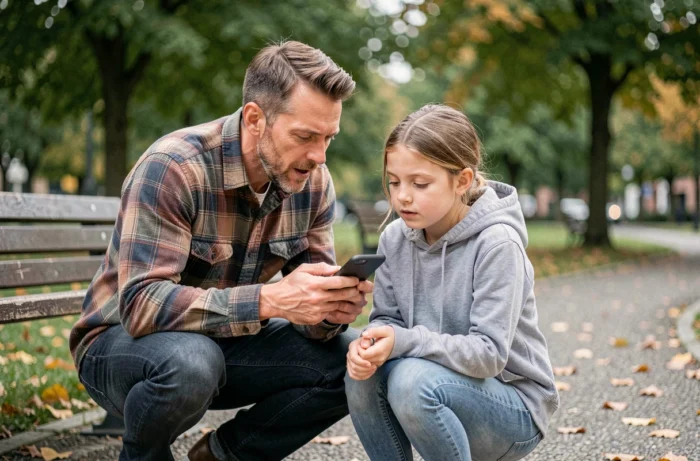
Three habits to build before formally checking the facts
- Ask the child to explain what they understood before reading the AI’s full answer, so they can spot the difference between what they already knew and what the machine adds.
- Find a second source together (a book, a children’s news article or an official website) to cross-check the information.
- Praise them for being unsure: when a child says, “I’m not sure that’s true,” it’s a sign that critical thinking is already at work.
Media literacy as a family: looking beyond traditional fake news
Spotting a doctored photo or a sensationalist headline is a first step. Most of the resources available stop there. CLEMI, for example, offers a practical guide titled “Growing Up in a Connected World: It’s a Skill You Can Learn!”, published in partnership with UNESCO in 2026, which covers the basics of digital literacy for families.
This foundation is still useful, but it doesn’t prepare families for an increasingly common situation: a child who no longer gets the news from an identifiable media outlet, but from AI-generated summaries or short video clips with no editorial context.
Supporting a child as they make sense of the news means understanding how they access it. If they get it from a chatbot or an algorithmically recommended feed, the usual fact-checking tools (cross-checking sources, identifying the author and checking the date) still apply—but first, the child needs to understand that they’re not dealing with a journalist.
The high school phone ban as a starting point for discussion
For the 2026–2027 school year, France is extending the ban on using phones and connected devices to high schools, with each school setting its own rules. The law also provides for digital awareness initiatives as part of schools’ development plans.
This measure doesn’t solve everything, but it gives families a concrete starting point for a conversation at home. You could ask a teenager how they feel about being disconnected during the school day and what they do differently during breaks. The school rule creates an opening for dialogue that parents can continue in the evening.

Everyday communication between parents and children: what works in practice
Parenting workshops, such as those offered in some towns (Pibrac, for example, is running sessions from May to July 2026 with family communication specialists), show that the main challenge isn’t a lack of information. It’s a lack of dedicated time to talk about it.
A screen-free meal once a week, where everyone shares one thing they learned that day, has more impact than sophisticated parental controls. The setting matters just as much as the subject.
- Choose a regular time (not necessarily every day—consistency matters more than frequency) for a conversation without digital devices.
- Start with what the child has seen or read rather than what you want to teach them: curiosity is easier to nurture when it starts with the child.
- Accept that you don’t know everything: when you look for an answer together, you model the behaviour you hope to see in your child.
Adapting the conversation to the child’s age
A six-year-old watching a YouTube Kids video doesn’t need a lesson on algorithms. They need you to ask why they like the video, what they remember from it and what surprised them. With a middle schooler, you can go further: compare a children’s news article with a chatbot’s summary of the same topic.
UNICEF France points out that digital protection isn’t just about banning access to social media. It means providing support that’s appropriate to a child’s stage of development, and using tools that evolve as they do.
Growing up together in a connected world means accepting that parents have things to learn, too. When a child explains how a chatbot works to their parents, they’re not wasting their time. They’re building a skill with them that schools are only just beginning to formalise.